RCA Victor 218-88604
1938 - Radio Receiver
see more
![objecto]()
![objecto]()
![objecto]()
+
-
© Cláudia Damas
+
-
+
-
How do you felt?
-
1 Happy -
0 Astonished -
0 Sadness -
0 Laughter
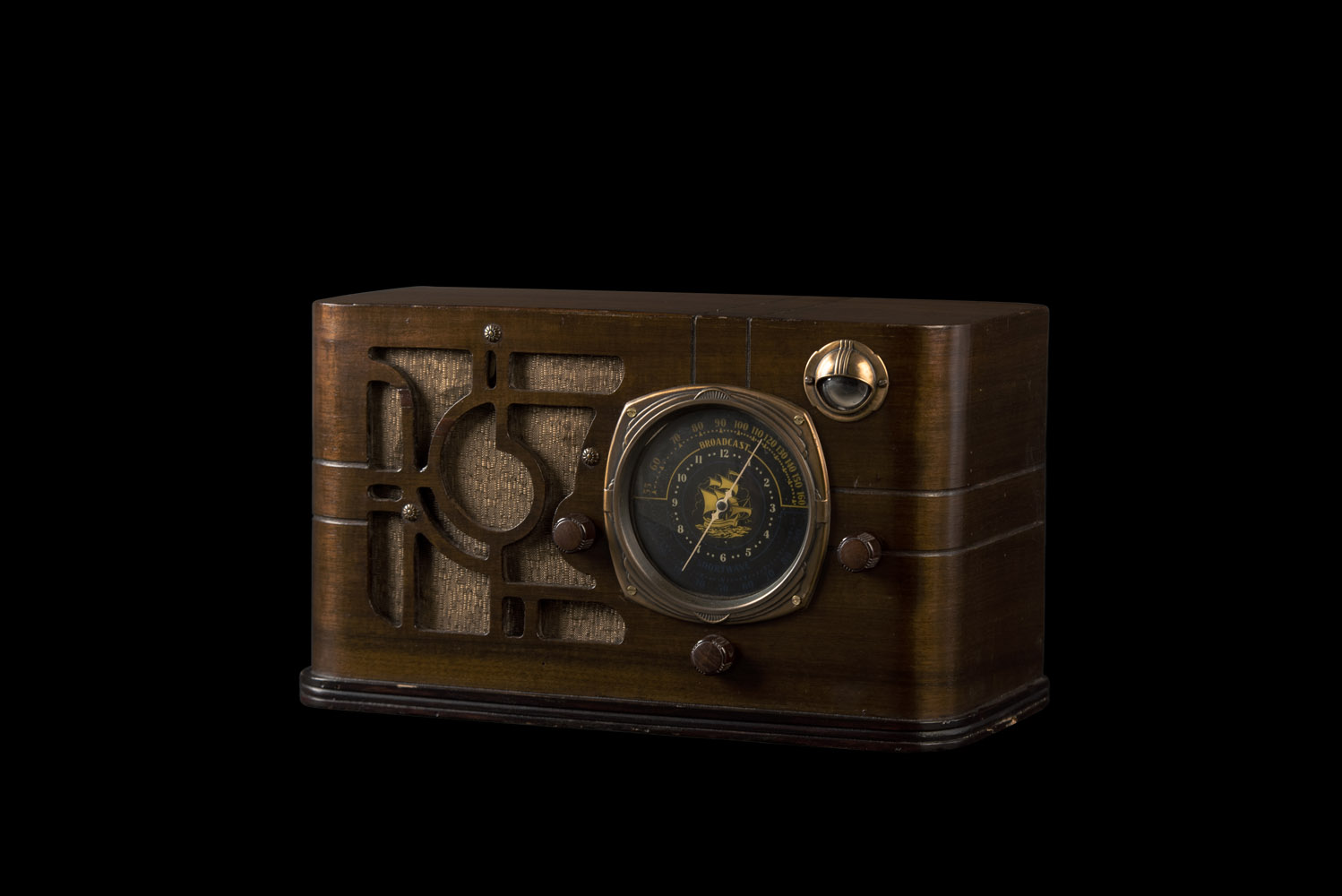
RCA Victor 218-88604
1938
- Radio Receiver
Superheterodyne radio receiver.
Broadcast.
Sound: Excerpt from the song "Ó Ai Ó Linda", written and performed by Estevão Amarante (1918).
The song was part of the comedy "O Conde Barão".
In 1936 the song was recorded for the first time, according to documents of the time, by Valentim de Carvalho.
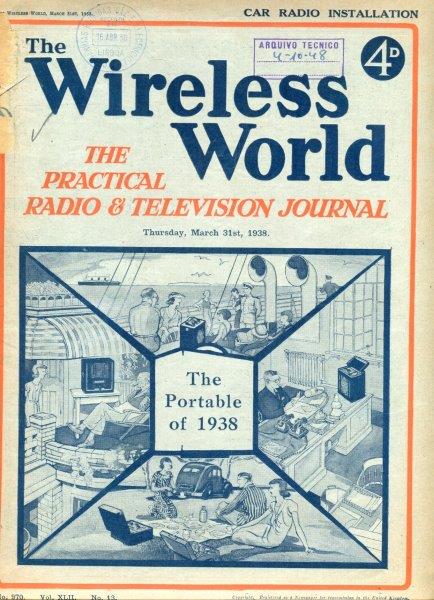
Image: Cover of The Wireless World (March 31, 1938).
The Wireless World is part of the documentary collection of the Historical Archive of the Museum and SP Support Center (https://museu.rtp.pt/arquivo-dci9).
Brand founded by David Sarnoff and Owen Young in 1919.
In 1929 RCA buys the Victor Talking Machine Company, at the time the world's largest manufacturer of records and phonographs, thus creating the subsidiary RCA Victor.
With this purchase, RCA Victor acquires the rights to the Nipper label, will produce radios, phonographs, notably the now well-known "Victrola" line, and continue record production.
Thus, RCA Victor developed and released the first 33 1/3 rpm records and in 1949, presented the first 45 rpm records.
In 1969 it changed its name to RCA Corporation.
To the brand are associated numerous technological innovations such as transmission equipment capturing, reproduction and recording of audio and television, being responsible for the color television technology (1954) adopted as the standard for American television, the NTSC system, responsible for the first transmission of satellite communications (1958), the SCORE (Signal Communications by Orbiting Relay Equipment), responsible for the first color video cassettes (1972) , responsible for the first color DVDs (1981), the manufacture of LCD screens, HD television equipment and, more recently, 4K.
In 1986 RCA was acquired by General Electric.
At present RCA is owned by Sony Music Entertainment and Technicolor, which licenses the brand name to other companies.
Also in 1938
- 1 of October - Germany annexes the Sudetenland.
- 5 of October - In Nazi Germany, Jews' passports are invalidated, and those who needed a passport for emigration purposes are given one marked with the letter J (Jude – Jew).
- 9 of November - The Nazi German diplomat Ernst vom Rath dies from the fatal gunshot wounds of Jewish resistance fighter Herschel Grynszpan, an act which the Nazis used as an excuse to instigate the 1938 national pogrom, also known as Kristallnacht (Crystal Night).
Philips Step 90RL077
1973 - Radio Receiver
see more
Philips Don 047 90RL-047
1974 - Radio Receiver
see more
Philips Jenny de Luxe 250 90RL
1975 - Radio Receiver
see more
Philips Don 088 90AL088
1978 - Radio Receiver
see more
Philips 4 Band 795
1979 - Radio Receiver
see more
Philips D2500
1980 - Radio Receiver
see more
Philips AQ6492 Moving Sound
1989 - Audio Player
see more
Philips Cairo Moving Sound D-1927
1990 - Radio Receiver
see more
Pilot Dragon Monarch 8
1933 - Radio Receiver
see more
Pilot B2
1933 - Radio Receiver
see more
Pilot Desconhecido
1933 - Radio Receiver with Turntable
see more
Pilot 63
1934 - Radio Receiver
see more